✓ The tradition of giving engagement rings dates back to ancient times, predating modern diamond rings by centuries.
✓ Early engagement rings were often simple bands made from materials like iron, symbolizing permanence and ownership.
✓ The Roman Empire played a significant role in establishing the custom of giving rings as a pledge of marriage.
✓ The Archduke Maximilian of Austria's proposal to Mary of Burgundy in 1477 is often cited as the first recorded diamond engagement ring.
✓ De Beers' 'A Diamond Is Forever' campaign in the mid-20th century cemented the diamond's status as the quintessential engagement gem.
How It Works
1
Ancient Origins
Understand the earliest forms of engagement rings, often simple bands of iron or other durable materials. These symbolized a binding promise and sometimes a transfer of ownership.
2
Roman Influence
Learn how the Roman Empire formalized the practice, with rings used to signify a betrothal and a wife's legal commitment to her husband. Rings were sometimes worn on specific fingers.
3
Medieval & Renaissance Era
Discover the introduction of more elaborate rings, often featuring precious metals and gemstones, though diamonds were rare. Posy rings, inscribed with romantic verses, gained popularity.
4
Modern Diamond Era
Trace the rise of the diamond engagement ring, propelled by royal precedent and powerful marketing campaigns. This era solidified the ring's iconic status as a symbol of eternal love.
The Ancient Roots of Betrothal Rings
Photo: Heriberto Jahir Medina / Pexels
The tradition of wearing a ring to signify a pledge of marriage is far older than many realize, stretching back into the annals of ancient history. Long before the sparkle of diamonds captivated hearts, simple bands held profound meaning. The earliest known examples of betrothal rings can be traced to ancient Egypt, where reeds and papyrus were twisted into circular forms and worn on the third finger of the left hand. For the Egyptians, the circle represented eternity, with no beginning and no end, perfectly symbolizing everlasting love and commitment. The open space in the center of the ring was seen as a gateway to the unknown, a future shared by two souls. These rudimentary rings, though perishable, laid the conceptual groundwork for what would become a global tradition. Explore ancient jewelry traditions to understand the broader context.
It was the Romans, however, who truly solidified and formalized the custom of giving an engagement ring. In Roman times, a ring, often made of iron, was given to the bride-to-be as a symbol of her future husband's ownership and her binding agreement to the marriage contract. These 'anulus pronubus' rings were not necessarily symbols of love in the romantic sense we understand today, but rather legal documents in metallic form, signifying a woman’s commitment and, in some cases, her father's acceptance of the union. Wealthier Romans might present a gold ring to be worn in public, alongside an iron ring for everyday wear at home, emphasizing durability and practicality over mere aesthetics. This duality highlighted the two facets of marriage: the public declaration and the private, binding agreement. The practice of wearing the ring on the fourth finger of the left hand also gained traction during this era, though the 'vena amoris' (vein of love) theory, directly connecting this finger to the heart, is largely a romanticized notion that emerged much later. Nevertheless, the Roman influence on the development of the engagement ring tradition is undeniable, establishing many of the core practices that would evolve over centuries.
Medieval and Renaissance Transformations
Photo: BR1 FDS / Pexels
As the Roman Empire faded, the tradition of betrothal rings did not disappear but rather evolved, shaped by new cultural and religious influences. During the early Middle Ages, rings continued to serve as a public declaration of intent to marry, often exchanged as part of the formal betrothal ceremony. The Church began to play a more prominent role, sanctioning these pledges and viewing the ring as a sacred emblem of fidelity. Materials became more varied, with silver and gold becoming common, and rudimentary gemstones occasionally appearing. However, these were not yet the dazzling, multi-faceted stones we associate with modern rings; rather, they were often cabochons or polished, un-cut gems.
By the 12th century, the significance of the engagement ring was further cemented by Christian tradition. Pope Innocent III is often credited with introducing a waiting period between betrothal and marriage, during which the ring served as a visible sign of the couple's commitment and a deterrent against pre-marital indiscretions. This period emphasized the seriousness of the promise being made. It was also during this time that the concept of the ring as a 'pledge' or 'earnest' gained stronger legal standing, making it a legally binding contract in many societies.
The Renaissance period brought a surge in artistry and symbolism to jewelry. Engagement rings became more elaborate, reflecting the era's fascination with intricate design and hidden meanings. Posy rings, inscribed with short poems or romantic verses on their inner or outer bands, became immensely popular. These inscriptions, often in Latin or French, expressed sentiments of love, loyalty, and devotion, adding a deeply personal touch to the ring. Gemstones, though still not typically diamonds, were chosen for their symbolic meanings: rubies for passion, sapphires for faithfulness, and emeralds for hope. This era marked a significant shift from the purely contractual nature of earlier rings to a more romantic and expressive symbol of affection. The increasing wealth and sophistication of European courts fueled demand for more exquisite pieces, pushing the boundaries of craftsmanship and design. While diamonds were known, their extreme rarity and difficulty in cutting meant they were reserved almost exclusively for royalty and the highest echelons of society, making them an exception rather than the norm for engagement rings during this transformative period.
The Rise of the Diamond and Modern Iconography
Photo: Jimmy Chan / Pexels
The trajectory of the engagement ring tradition took an irreversible turn with the emergence of the diamond as its undisputed king. While diamonds had been known for centuries, their extreme rarity, coupled with the technological limitations in cutting them to maximize their brilliance, meant they were largely inaccessible and not widely used in jewelry. That all changed in 1477, a pivotal moment often cited as the origin of the diamond engagement ring. Archduke Maximilian of Austria, seeking to propose to Mary of Burgundy, commissioned a ring set with flat, table-cut diamonds forming the letter 'M'. This historical event set a precedent among European aristocracy, gradually associating diamonds with proposals and the highest forms of commitment. However, it would still be centuries before diamonds became truly mainstream.
The discovery of vast diamond mines in South Africa in the late 19th century dramatically increased the supply of diamonds. This abundance, combined with advancements in cutting technology that allowed for the creation of brilliant facets, set the stage for the diamond's ascendancy. Yet, despite the increased availability, diamonds were still not the automatic choice for engagement rings. It took a brilliant marketing campaign by the De Beers diamond company in the mid-20th century to solidify the diamond's iconic status. Facing declining diamond sales after the Great Depression, De Beers launched its now-legendary 'A Diamond Is Forever' campaign in 1947. This campaign, through shrewd advertising and celebrity endorsements, linked diamonds inextricably with eternal love, permanence, and the ultimate symbol of commitment. It ingeniously suggested that an engagement ring should contain a diamond, and that the size of the diamond should reflect the proposer's income (initially one month's salary, later two or three). Understand the lasting impact of this marketing on consumer perception.
This marketing triumph profoundly reshaped societal expectations surrounding engagement rings, particularly in the United States, and subsequently globally. The diamond engagement ring became a cultural touchstone, a rite of passage, and a powerful symbol of status and enduring affection. Jewelers capitalized on this, offering a wide array of styles, from classic solitaires to intricate settings, catering to diverse tastes while maintaining the central role of the diamond. The 20th century cemented the diamond engagement ring not just as a piece of jewelry, but as a deeply ingrained cultural artifact, embodying promises of forever and aspirations of a shared future. This era underscored the power of cultural narratives and strategic branding in transforming a luxury item into an essential component of a deeply personal tradition.
Contemporary Trends and Evolving Symbolism
Photo: HONG SON / Pexels
While the diamond engagement ring remains a dominant symbol, the 21st century has brought a fascinating evolution to the tradition, reflecting changing values, increased awareness, and a desire for personalization. Today, couples are embracing a broader spectrum of choices, moving beyond the strict confines of the 'two months' salary' diamond rule. Here are some key contemporary trends:
* **Ethical Sourcing and Sustainability:** A growing number of consumers are prioritizing ethically sourced diamonds, such as those certified conflict-free, or opting for laboratory-grown diamonds. Lab-grown diamonds offer the same chemical, physical, and optical properties as mined diamonds but with a reduced environmental and ethical footprint, often at a more accessible price point. This shift reflects a greater consciousness about the origin and impact of their purchases.
* **Alternative Gemstones:** Sapphires, emeralds, rubies, and moissanite are experiencing a resurgence in popularity as central stones. These offer unique colors, different price points, and a distinct aesthetic that appeals to those looking for something less conventional. Vintage and antique rings, often featuring these alternative stones, are also highly sought after for their unique charm and history.
* **Unique Designs and Customization:** Beyond the classic solitaire, couples are opting for custom-designed rings that reflect their individual personalities and stories. This includes unique settings, mixed metals, intricate filigree, and personalized engravings. Heirloom stones or redesigned family rings also offer a deeply personal connection to the past.
* **Gender-Neutral and Male Engagement Rings:** The tradition is expanding to include male engagement rings, or 'mangagement rings,' challenging traditional gender roles and celebrating mutual commitment. These can range from simple bands to more elaborate designs, often incorporating diamonds or other gemstones.
* **Focus on Experience and Story:** For many, the value lies not just in the ring itself, but in the story behind it, the proposal experience, and the shared journey it represents. This can lead to choices that prioritize sentimental value over monetary cost.
These evolving trends demonstrate that while the core tradition of the engagement ring endures, its expression is becoming more diverse and reflective of modern sensibilities. The ring remains a powerful symbol of love and commitment, but its form is now as varied and unique as the couples who wear them.
Comparison
Feature
Diamond Solitaire
Lab-Grown Diamond
Sapphire Ring
Vintage Ring
Symbolism
Classic, enduring love
Ethical, modern love
Wisdom, royalty, fidelity
Unique, historical story
Cost (Average)
High
Moderate
Moderate to High
Varies widely
Brilliance
Exceptional
Exceptional
Good (color focus)
Varies by stone
Durability
Excellent (10 Mohs)
Excellent (10 Mohs)
Very Good (9 Mohs)
Varies by materials
Uniqueness
Standard yet elegant
Identical to mined
Distinct color
One-of-a-kind
Ethical Concerns
Can vary, requires certification
✓
Generally low
Often pre-owned, sustainable
What Readers Say
★★★★★
"Understanding the history of engagement rings tradition really deepened my appreciation for my own ring. It's amazing to think how far back this practice goes and how many different meanings it's held over time. This article was incredibly informative and made my ring feel even more special."
Sarah J. · Austin, TX
★★★★★
"I was looking for something unique for my proposal and this article on the history of engagement rings tradition gave me so many ideas beyond just the typical diamond. It was fascinating to learn about the Roman and medieval customs. Highly recommend for anyone looking to make an informed choice."
David M. · Seattle, WA
★★★★★
"This deep dive into the history of engagement rings tradition was exactly what I needed! I chose a sapphire ring because of its symbolism, and learning about its medieval significance confirmed I made the perfect choice. My fiancé loves it, and we feel connected to a rich heritage."
Emily R. · New York, NY
★★★★★
"The article was incredibly comprehensive, covering everything from ancient reeds to lab-grown diamonds. While I ultimately went with a classic diamond, understanding the ethical sourcing trends and alternative options was very valuable. It's clear the tradition is evolving."
Michael B. · Chicago, IL
★★★★★
"As a jewelry enthusiast, I thought I knew a lot, but this history of engagement rings tradition piece taught me so much more! The details about posy rings and the De Beers campaign were particularly insightful. It's a fantastic resource for anyone interested in jewelry's cultural impact."
Jessica L. · Los Angeles, CA
Frequently Asked Questions
What is the true origin of the engagement ring tradition?
The origin of the engagement ring tradition can be traced back to ancient Egypt, where rings made of reeds symbolized eternity. The Romans later formalized the practice, using iron rings as a legal pledge of marriage. These early forms set the stage for the more elaborate rings seen today.
Is a diamond engagement ring a mandatory part of the tradition?
While diamond engagement rings became incredibly popular due to a successful 20th-century marketing campaign, they are not a mandatory part of the tradition. Historically, rings were made of various materials, and many couples today choose alternative gemstones or unique designs that better reflect their personal preferences and values.
Which finger traditionally wears the engagement ring?
The engagement ring is traditionally worn on the fourth finger of the left hand in many Western cultures. This custom is often romantically attributed to the 'vena amoris' or 'vein of love' believed to connect this finger directly to the heart, though this is more symbolic than anatomical.
How much should one spend on an engagement ring?
The 'rule' of spending two or three months' salary on an engagement ring was largely a marketing creation by De Beers. Today, there is no universally accepted amount. The ideal spend is highly personal and should be based on individual financial comfort and what feels right for the couple, prioritizing meaning over arbitrary cost metrics.
Are there ethical concerns with engagement rings, and what are the alternatives?
Yes, ethical concerns regarding diamond mining, often termed 'conflict diamonds,' have led to increased awareness. Alternatives include choosing certified conflict-free diamonds (like those adhering to the Kimberley Process), opting for lab-grown diamonds, or selecting alternative gemstones such as sapphires, emeralds, or moissanite, which often have clearer ethical sourcing paths.
Who should consider learning about the history of engagement rings tradition?
Anyone considering a proposal, buying an engagement ring, or simply interested in the cultural significance of jewelry should delve into this history. It provides valuable context, enriches the meaning of the ring, and can inspire more personalized and informed choices that resonate deeply with a couple's values.
Is the engagement ring tradition evolving, and what does the future hold?
Yes, the engagement ring tradition is constantly evolving. The future will likely see a continued emphasis on personalization, ethical sourcing, and sustainability. Lab-grown diamonds and alternative gemstones are becoming more mainstream, and cultural norms are expanding to embrace more diverse expressions of commitment, including gender-neutral options.
Did ancient cultures use gemstones in their engagement rings?
While ancient Egyptians and Romans primarily used simpler materials like reeds, iron, or gold, the use of gemstones in betrothal rings became more prevalent during the Medieval and Renaissance periods. However, diamonds were extremely rare and costly, primarily reserved for royalty, with other stones like rubies, sapphires, and emeralds chosen for their symbolic meanings.
The history of engagement rings tradition is a tapestry woven through millennia, reflecting evolving cultures, beliefs, and expressions of love. By understanding its rich past, you can choose an engagement ring that not only symbolizes your unique commitment but also connects you to a timeless human story. Explore our curated selection or consult with our experts to find a ring that truly embodies your journey.

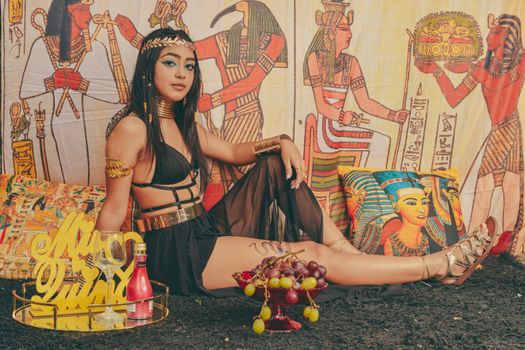 Photo: Heriberto Jahir Medina / Pexels
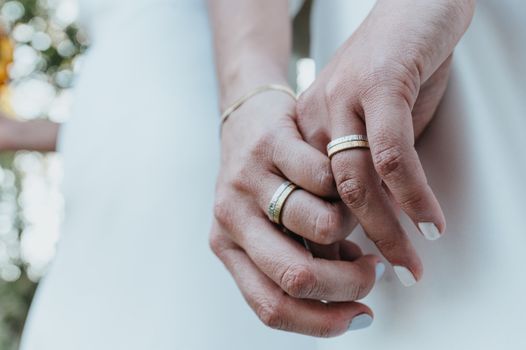 Photo: BR1 FDS / Pexels
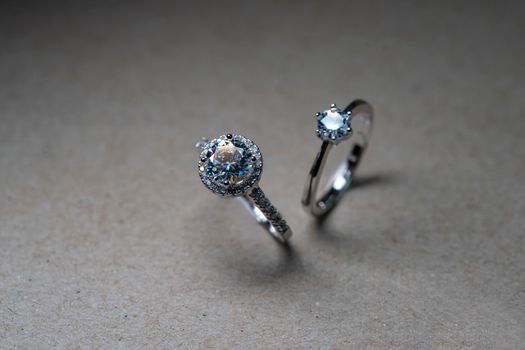 Photo: Jimmy Chan / Pexels
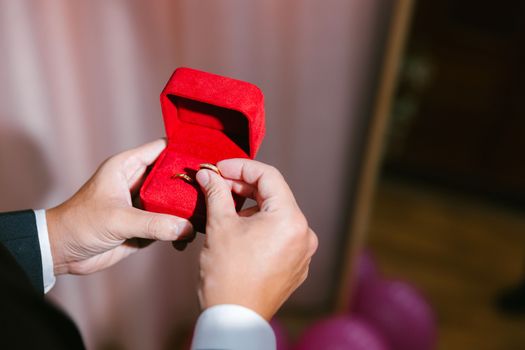 Photo: HONG SON / Pexels