how to choose an engagement ring: Your Ultimate Guide
how to choose an engagement ring

how to choose an engagement ring: Your Ultimate Guide

Navigate the exciting journey of selecting the perfect engagement ring with expert advice, ensuring a symbol as unique as your love story.

Start Your Journey

Key Takeaways

  • ✓ Budget is often the first and most crucial decision when buying an engagement ring.
  • ✓ The 4 Cs (Cut, Color, Clarity, Carat) are fundamental to understanding diamond quality.
  • ✓ Ring setting significantly impacts the diamond's appearance and the ring's overall style.
  • ✓ Personalization, whether through engraving or custom design, adds immense sentimental value.

How It Works

1
Set Your Budget & Research

Determine a comfortable spending range that aligns with your financial situation. Begin researching different ring styles, diamond basics, and reputable jewelers to gain initial insights.

2
Understand the 4 Cs

Familiarize yourself with Cut, Color, Clarity, and Carat weight, as these factors dictate a diamond's quality and price. Prioritize which C is most important to you based on your partner's preferences and your budget.

3
Choose the Setting & Metal

Select a ring setting (e.g., solitaire, halo, pave) that complements your partner's style and the chosen diamond. Decide on a metal type (e.g., platinum, white gold, yellow gold) considering durability, aesthetics, and potential allergies.

4
Personalize & Purchase

Consider custom touches like engraving or a unique design to make the ring truly one-of-a-kind. Make your purchase from a trusted jeweler, ensuring proper certification and return policies are in place.

Setting Your Engagement Ring Budget and Priorities

Positive ethnic man sitting at coffee table with laptop and smartphone and books and notebook and calculating while smiling ethnic wife sitting on sofa and supporting and watching behind Photo: Ketut Subiyanto / Pexels
Embarking on the journey of how to choose an engagement ring begins with a fundamental, yet often overlooked, step: establishing your budget. This isn't just about how much you can spend, but how much you *want* to spend comfortably, without financial strain. Forget the outdated 'three months' salary' rule; modern engagement ring buying is about personal finance and thoughtful consideration. Your budget will be the guiding star that influences every subsequent decision, from diamond size to metal choice and setting complexity. Be realistic with yourself about what you can afford, and communicate this openly if you're shopping together. Remember, the ring is a symbol of love, not a measure of it. Many couples today opt for financing options or layaway plans, so explore these avenues if they align with your financial strategy. Don't shy away from discussing this with your partner if appropriate; many prefer to be involved in the financial planning. Once your budget is set, it's time to prioritize. This is where the concept of the '4 Cs' of diamond quality comes into play: Cut, Color, Clarity, and Carat weight. For most buyers, maximizing all four Cs simultaneously isn't feasible within a typical budget. Therefore, you'll need to decide which aspects are most important to you and your partner. For instance, some prioritize a larger carat weight, even if it means slightly compromising on color or clarity. Others might value a perfectly cut diamond for its brilliance, even if it means a smaller size. Understanding each C is vital. **Cut** refers to how well a diamond's facets interact with light, determining its sparkle and brilliance. This is often considered the most important C, as a well-cut diamond can appear larger and more brilliant than a poorly cut one of the same carat weight. **Color** refers to the absence of color in a diamond, with a D grade being colorless and Z having a noticeable yellow tint. Most people prefer diamonds in the D-J range, which appear colorless or near-colorless to the naked eye. **Clarity** measures the absence of inclusions (internal flaws) and blemishes (external flaws). While flawless diamonds are exceedingly rare and expensive, many diamonds with inclusions invisible to the naked eye (VS1, VS2, SI1) offer excellent value. Finally, **Carat** is the diamond's weight, not its size. While a higher carat weight generally means a larger diamond, the cut can significantly impact its perceived size. Beyond the diamond, your budget will also influence the choice of metal and setting. Platinum is durable and hypoallergenic but generally more expensive than gold. Gold comes in various purities (10k, 14k, 18k) and colors (yellow, white, rose), each with different price points and durability. The complexity of the setting – a simple solitaire versus a halo or pave design – also impacts cost. A well-informed decision on these priorities within your budget will lead you to a ring that perfectly balances beauty, quality, and affordability. For more insights on metal choices, check out our guide on precious metals for engagement rings.

Navigating Diamond Choice: The 4 Cs and Beyond
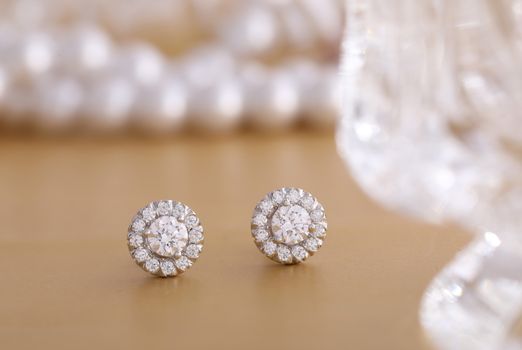
Close-up of round diamond earrings on a gold background, showcasing luxury and elegance. Photo: The Glorious Studio / Pexels
The diamond is often the centerpiece of an engagement ring, and understanding its characteristics is paramount when learning how to choose an engagement ring. As discussed, the 4 Cs – Cut, Color, Clarity, and Carat – form the foundation of diamond evaluation. However, truly navigating diamond choice involves a deeper dive into each of these factors and considering how they interact. Let's start with **Cut**, which jewelers and experts often agree is the most important of the 4 Cs for a diamond's overall beauty. A diamond's cut quality isn't about its shape (round, princess, oval), but how well its facets are proportioned, symmetrical, and polished. An excellent cut maximizes a diamond's brilliance (white light reflection), fire (dispersion of light into spectral colors), and scintillation (sparkle). Even a diamond with perfect color and clarity can appear dull if it has a poor cut. Look for diamonds graded 'Excellent' or 'Very Good' by reputable grading labs like GIA or AGS. These grades assure you of superior light performance. Next, **Color**. While colorless diamonds (D, E, F) are the rarest and most expensive, near-colorless diamonds (G, H, I, J) offer excellent value, often appearing colorless to the naked eye, especially when set in white metals like platinum or white gold. If you're opting for a yellow gold setting, a diamond with a slight yellowish tint (K, L, M) can even be complementary, as the gold will mask some of the color, allowing you to get a larger stone for your budget. **Clarity** refers to the presence of internal characteristics (inclusions) and external characteristics (blemishes). The GIA clarity scale ranges from Flawless (FL) to Included (I3). For most buyers, diamonds in the VS1 (Very Slightly Included) to SI1 (Slightly Included) range offer the best balance of quality and value. Inclusions in these grades are typically not visible without magnification, making them 'eye-clean'. When examining clarity, pay attention to the type, size, number, location, and relief of inclusions. A small inclusion near the girdle might be hidden by the prongs, for example. Finally, **Carat** weight. While often associated with size, carat is actually a unit of weight (1 carat = 200 milligrams). Two diamonds of the same carat weight can appear different in size depending on their cut and shape. A well-cut diamond might have a larger spread (face-up dimension) than a poorly cut one of the same carat weight. Remember that prices jump significantly at popular carat weights (e.g., 0.50 ct, 0.75 ct, 1.00 ct). Buying just under these thresholds (e.g., 0.90 ct instead of 1.00 ct) can save you a considerable amount without a noticeable difference in size. Beyond the 4 Cs, consider the diamond's shape. While round brilliants are the most popular for their unparalleled sparkle, fancy shapes like oval, princess, emerald, cushion, and pear offer unique aesthetics. Each shape has its own characteristics; for instance, elongated shapes like oval and marquise can appear larger than a round diamond of the same carat weight. Always request a diamond grading report from an independent, reputable laboratory (GIA or AGS) to ensure the diamond's characteristics are accurately assessed and verified. This report is your guarantee of quality and an essential part of your purchase.

See also: Adultwork.

Selecting the Perfect Setting and Metal for Lasting Beauty
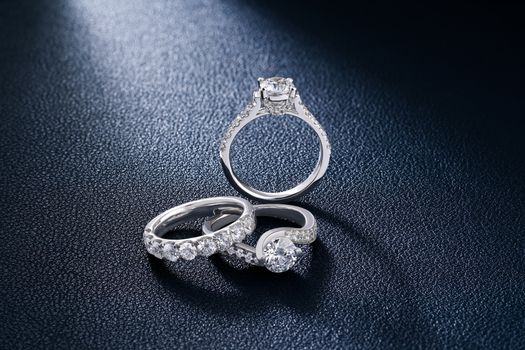
Close-up of luxurious diamond engagement and wedding rings on a textured surface, showcasing elegance and craftsmanship. Photo: The Glorious Studio / Pexels
Once you have a firm grasp on the diamond's characteristics, the next critical step in how to choose an engagement ring is selecting the perfect setting and metal. These choices are not merely aesthetic; they profoundly impact the ring's durability, comfort, and how the diamond is presented. The setting is the metal structure that holds the diamond, and it plays a huge role in defining the ring's overall style and protecting its precious stone. The metal, on the other hand, forms the band itself, dictating its color, feel, and longevity. There's a vast array of setting styles, each offering a unique look and level of diamond protection. The **solitaire setting** is perhaps the most classic and popular choice. It features a single diamond held by prongs, allowing maximum light to enter the stone and emphasizing its brilliance. It's elegant, timeless, and versatile. A **halo setting** surrounds the center diamond with a 'halo' of smaller pave diamonds, making the central stone appear larger and adding extra sparkle. This is a great option for those who want a more elaborate look or to maximize the perceived size of their diamond within a budget. **Pave settings** feature small diamonds set closely together along the band, creating a continuous surface of sparkle. This can be combined with a solitaire or halo for added grandeur. **Channel settings** embed diamonds flush within a metal channel, offering a sleek, modern look and excellent protection for the stones. **Bezel settings** encircle the entire diamond with a thin rim of metal, providing the most secure hold and a contemporary, low-profile design, though it can slightly reduce light entry. **Three-stone settings** feature a central diamond flanked by two smaller stones, often symbolizing the past, present, and future of a relationship. Each setting style brings its own personality and benefits, so consider your partner's lifestyle and personal aesthetic when making this choice. Regarding metal, the most popular choices for engagement rings are platinum, white gold, yellow gold, and rose gold. **Platinum** is a naturally white, dense, and extremely durable metal. It is hypoallergenic and develops a beautiful patina over time, which some prefer, though it can be repolished to its original luster. Its rarity and density make it the most expensive option. **White gold** is an alloy of yellow gold with other white metals like palladium or nickel, then plated with rhodium to achieve its bright white finish. It's more affordable than platinum but requires re-plating every few years to maintain its luster. **Yellow gold** is the most traditional choice, known for its warm, classic appeal. It's an alloy of pure gold with silver and copper. Its purity is measured in karats (k), with 14k and 18k being common for engagement rings – 18k is purer and softer, while 14k is more durable due to a higher percentage of alloyed metals. **Rose gold** (or pink gold) gets its romantic hue from an alloy of gold and copper. It's a fashionable choice that complements various skin tones and offers a unique, vintage-inspired aesthetic. When choosing the metal, consider durability, maintenance, price, and potential allergies. Platinum and high-karat gold are hypoallergenic, making them suitable for sensitive skin. The metal choice should also complement the diamond's color; for instance, a slightly warmer diamond (e.g., J or K color) can look stunning in yellow or rose gold, where the metal's warmth minimizes the diamond's tint. Conversely, a high-color (D-G) diamond typically shines brightest in white gold or platinum. Think about how the ring will integrate into your partner's daily life and how it will look alongside other jewelry they wear. For more detailed information, exploring different types of ring settings can provide further clarity.

Personalization and Essential Considerations for Your Purchase

Beyond the diamond and setting, the process of how to choose an engagement ring extends to crucial personalization elements and practical considerations that ensure a smooth and joyful purchase. Making the ring truly unique adds immense sentimental value, transforming it from a beautiful piece of jewelry into a deeply personal symbol of your love story. **Personalization Options:** * **Engraving:** A classic way to personalize an engagement ring is through engraving. This could be your initials, the proposal date, a significant quote, or a short message that holds special meaning to both of you. Many jewelers offer this service, and it's a subtle, intimate touch that only the wearer knows about. * **Custom Design:** If you have a very specific vision or want something truly one-of-a-kind, consider a custom-designed ring. This allows you to collaborate with a jeweler to create a ring that perfectly embodies your partner's style and your relationship. This might involve unique stone arrangements, incorporating birthstones, or designing a setting from scratch. While potentially more expensive, the result is an unparalleled piece. * **Heirloom Diamonds or Settings:** Incorporating an heirloom diamond or repurposing an existing family setting can add incredible sentimental value and a sense of history to the ring. This not only makes the ring unique but also connects your present to your family's past. Ensure the jeweler is experienced in working with older stones or settings. **Essential Purchase Considerations:** * **Ring Size:** This is paramount. If you're planning a surprise, try to discreetly find out your partner's ring size. You can borrow an existing ring, ask a close friend or family member, or even use a printable ring sizer. Many jewelers offer one free resizing, but getting it close from the start is best. * **Certification:** Always insist on a diamond grading report from an independent, reputable laboratory like the Gemological Institute of America (GIA) or the American Gem Society (AGS). This report verifies the diamond's 4 Cs and ensures you're getting exactly what you pay for. Do not rely solely on store certifications. * **Reputable Jeweler:** Choose a jeweler with a strong reputation, positive customer reviews, and transparent business practices. They should be knowledgeable, patient, and willing to answer all your questions. Look for jewelers who offer strong return policies, warranties, and after-sales services like cleaning and inspection. * **Insurance:** An engagement ring is a significant investment. As soon as you purchase it, arrange for appropriate insurance. This will protect you financially in case of loss, theft, or damage. Many homeowners' or renters' insurance policies can cover jewelry, or you can opt for specialized jewelry insurance. * **Return and Exchange Policy:** Understand the jeweler's return and exchange policy before making a purchase. This is especially important if you're buying without your partner's direct input. A generous return window can provide peace of mind. * **Maintenance:** Ask about the ring's maintenance requirements. All rings, especially those with intricate settings, require occasional cleaning and inspection to ensure the stones are secure and the metal is in good condition. A good jeweler will offer complimentary cleaning services. By carefully considering these personalization options and practicalities, you'll not only select a stunning piece of jewelry but also ensure a smooth, confident purchase experience, culminating in a ring that truly symbolizes your unique bond.

Comparison

FeatureClassic SolitaireSparkling HaloSecure BezelElegant Pave
Visibility of DiamondMaximizedEnhanced, appears largerSlightly reducedEnhanced by surrounding sparkle
Protection LevelModerate (prongs)Moderate to HighHighestModerate (small stones)
MaintenanceLowModerate (more crevices)LowModerate (more stones to clean)
Cost (Setting Only)LowestMedium to HighMediumMedium to High
Modern Appeal

What Readers Say

"This guide truly demystified how to choose an engagement ring. I felt so overwhelmed before, but the breakdown of the 4 Cs and setting types made the process clear and enjoyable. My fiancé absolutely loves the ring I picked!"

Sarah J. · Austin, TX

"The section on budgeting and prioritizing was a game-changer. It helped me set realistic expectations and focus on what truly mattered to my partner, rather than getting caught up in outdated traditions. Highly recommend this article."

David M. · Seattle, WA

"Following the advice on choosing a reputable jeweler and insisting on GIA certification saved me a lot of stress. I felt confident in my purchase, knowing I got a high-quality, ethically sourced diamond. My ring is stunning!"

Emily R. · Miami, FL

"While very comprehensive, I wish there was a bit more on alternative stones. However, the diamond information was top-notch, and the tips on personalization made the ring truly special for my fiancée. Overall, a fantastic resource."

Michael T. · Denver, CO

"As someone who wanted to be involved in the ring selection, this guide was invaluable. It helped my partner and me communicate our preferences effectively, leading to a ring that perfectly reflects our shared style and love."

Jessica L. · Boston, MA

Frequently Asked Questions

What's the most important factor when choosing a diamond for an engagement ring?

While all 4 Cs (Cut, Color, Clarity, Carat) are important, many experts agree that Cut is the most crucial. An excellent cut maximizes a diamond's brilliance and sparkle, making it appear more lively and often larger than a poorly cut diamond of the same carat weight. Prioritizing cut often yields the most visually stunning results.

Do I really need to spend 'three months' salary' on an engagement ring?

Absolutely not. The 'three months' salary' rule is an outdated marketing ploy. The most important thing is to set a budget that you are comfortable with and that fits your financial situation. The ring is a symbol of your love, and its value comes from its sentiment, not its price tag.

How do I find out my partner's ring size discreetly?

There are several ways: borrow a ring they already wear on their ring finger and trace its inner circumference or press it into a bar of soap. You can also ask a close friend or family member for help. If all else fails, most jewelers offer one free resizing, so it's better to guess slightly larger than too small.

Is it better to buy an engagement ring online or in a physical store?

Both options have pros and cons. Online retailers often offer a wider selection and competitive prices, but you can't physically see the diamond. Physical stores allow you to examine the ring in person and receive personalized service, though prices might be higher. Many people choose a hybrid approach, researching online and then viewing options in-store.

What's the difference between white gold and platinum?

White gold is an alloy of yellow gold with other white metals, plated with rhodium to achieve its bright white color, requiring re-plating over time. Platinum is a naturally white, denser, and hypoallergenic metal that does not require plating. Platinum is generally more durable and expensive, while white gold offers a more affordable option with a similar aesthetic.

Who should use this guide on how to choose an engagement ring?

This comprehensive guide is designed for anyone embarking on the journey of purchasing an engagement ring, whether you're shopping alone for a surprise proposal, or as a couple making this significant decision together. It's ideal for first-time buyers seeking clarity and confidence in their selection process.

Are lab-grown diamonds a good alternative to natural diamonds?

Yes, lab-grown diamonds are an excellent and increasingly popular alternative. They are chemically, physically, and optically identical to natural diamonds, but are typically more affordable and considered more ethically and environmentally conscious. They offer the same brilliance and beauty at a lower price point, allowing for larger or higher-quality stones within budget.

What are the emerging trends in engagement ring design?

Current trends include unique fancy-shaped diamonds (especially ovals and emerald cuts), minimalist and ethically sourced designs, intricate vintage-inspired settings, and the growing popularity of colored gemstones as center stones or accents. Rose gold also continues to be a strong trend, offering a romantic and distinctive alternative to traditional white and yellow metals.

Armed with this comprehensive guide on how to choose an engagement ring, you're ready to embark on this exciting journey with confidence. Remember, the perfect ring isn't just about the diamond's sparkle, but the love it symbolizes and the thoughtfulness behind its selection. Take your time, trust your instincts, and choose a ring that beautifully represents your unique love story.

Topics: how to choose an engagement ringengagement ring guidebuying an engagement ringdiamond ring selectionengagement ring budget
Leo List
Brampton weed
Adultwork EstrelaBet Vai de Bet R7 Bet Betão Galera Bet Rainbet Bet9ja Shop SportyBet BetKing Sisal Loto Foot Hollywoodbets YesPlay Odibets RushBet Jugabet BetWarrior BetCity MSport betPawa Fortebet