How to Choose an Engagement Ring Style: Your Ultimate Guide
how to choose an engagement ring style

How to Choose an Engagement Ring Style: Your Ultimate Guide

Unlock the secrets to selecting an engagement ring that embodies your unique love and lasts a lifetime.

Start Your Journey

Key Takeaways

  • ✓ Personal style and lifestyle are crucial factors in ring selection.
  • ✓ Understanding the 4 Cs (cut, color, clarity, carat) is fundamental to diamond choice.
  • ✓ Ring settings significantly impact the diamond's appearance and ring's durability.
  • ✓ Budget, metal type, and ethical sourcing are important considerations.

How It Works

1
Observe Her Style

Pay close attention to the jewelry she already wears, her fashion sense, and her Pinterest boards. This will provide invaluable clues about her preferred aesthetic and help you narrow down styles.

2
Understand the Basics

Familiarize yourself with diamond shapes, metal types, and common settings. This foundational knowledge will empower you to make informed decisions and communicate effectively with jewelers.

3
Set a Realistic Budget

Determine how much you are comfortable spending before you start looking. A clear budget helps prioritize features and avoids overspending or disappointment.

4
Consult with Experts

Visit reputable jewelers and ask questions. Their expertise can guide you through the intricacies of ring design, gemstone quality, and customization options to ensure your choice is perfect.

Decoding Her Personal Style: The Foundation of Ring Selection
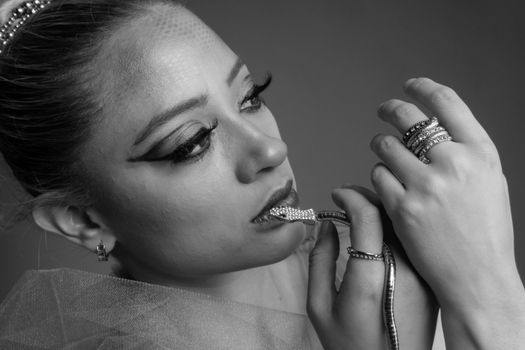
Black and white portrait of a woman adorned with sparkling jewelry, showcasing elegance and style. Photo: Israyosoy S. / Pexels
Choosing an engagement ring is a deeply personal journey, and the most crucial first step is to truly understand the recipient's personal style. This isn't just about picking something pretty; it's about selecting a piece that resonates with her identity, complements her daily life, and becomes a cherished extension of who she is. Start by becoming a keen observer. What kind of jewelry does she currently wear? Is it delicate and understated, or bold and statement-making? Does she gravitate towards classic pieces, or does she embrace modern, avant-garde designs? Pay attention to the metals she prefers – is it warm yellow gold, cool white gold or platinum, or perhaps trendy rose gold? Her existing collection offers a roadmap to her aesthetic preferences. Beyond jewelry, consider her overall fashion sense. Is her wardrobe minimalist and sophisticated, bohemian and free-spirited, or classic and elegant? Her clothing choices often mirror her taste in accessories. For instance, someone with a very active lifestyle might prefer a lower-profile setting that won't snag, while someone who loves vintage fashion might adore an Art Deco-inspired design. If you have access, discreetly browse her social media, particularly Pinterest boards. Many individuals use these platforms to curate their ideal visions, and you might find a treasure trove of pins dedicated to engagement rings, wedding dresses, or even general aesthetic preferences. This is an unparalleled resource for understanding her dream ring. Engage her friends or family members who might have insights into her desires. They can offer invaluable perspectives, but ensure they can keep a secret! Consider her hobbies and profession. If she works with her hands, a delicate pave setting might not be the most practical choice. A robust bezel or channel setting might be more suitable. Conversely, if her job involves a lot of public speaking or social events, a striking, eye-catching design might be ideal. The goal is to choose a ring that she'll not only love but also feel comfortable wearing every day, seamlessly integrating into her life. Remember, this ring is a symbol of your love, and choosing one that aligns with her authentic self will make it even more meaningful. For more insights into popular designs, explore our guide on timeless engagement ring settings.

Understanding Diamond Shapes and Ring Settings: Crafting the Perfect Look
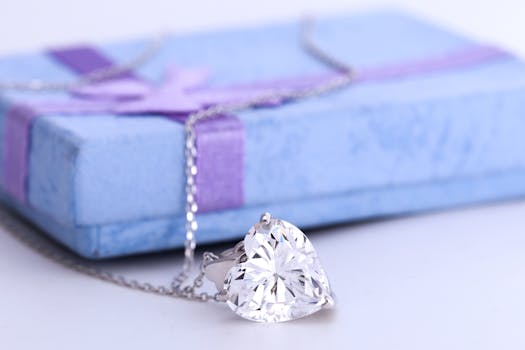
Close-up of a luxurious heart-shaped diamond necklace on a blue gift box, symbolizing elegance and love. Photo: The Glorious Studio / Pexels
Once you have a good grasp of her personal style, it's time to delve into the intricate world of diamond shapes and ring settings – two elements that fundamentally define the look and feel of an engagement ring. The diamond's shape is often the first visual characteristic noticed and can dramatically influence the ring's overall aesthetic. The classic round brilliant is by far the most popular, renowned for its unparalleled sparkle and timeless appeal. However, there's a vast array of other captivating shapes: the elegant emerald cut, known for its sophisticated step-cut facets; the romantic oval, offering a larger surface area and elongating effect; the unique pear, a teardrop shape that combines round and marquise elements; the square princess cut, a modern and brilliant choice; the cushion cut, a soft square with rounded corners; and the heart shape, for the truly romantic. Each shape carries a distinct personality and can evoke different sentiments. Consider which shape best aligns with her aesthetic. A minimalist might prefer an emerald or asscher cut, while a romantic might lean towards an oval or cushion. The ring's setting is equally crucial, as it holds the diamond and forms the foundation of the ring's design. The most common setting is the solitaire, featuring a single diamond, emphasizing its brilliance and simplicity. This classic choice is incredibly versatile. Halo settings feature a circle of smaller diamonds surrounding the center stone, enhancing its apparent size and adding extra sparkle. Pave settings incorporate tiny diamonds embedded into the band, creating a shimmering effect. Bezel settings fully encase the diamond in metal, offering maximum protection and a sleek, modern look. Channel settings secure diamonds within a channel, providing a smooth, snag-free surface, often seen in wedding bands. Three-stone settings represent past, present, and future, with a central diamond flanked by two smaller ones. Vintage-inspired settings often feature intricate filigree, milgrain detailing, and unique geometric patterns, reminiscent of bygone eras. Each setting not only contributes to the ring's beauty but also impacts its durability and how the diamond is presented. A high-profile setting, for example, allows more light to enter the diamond, maximizing sparkle, but might be less practical for an active wearer. Conversely, a low-profile setting is more secure but might offer slightly less brilliance. The interplay between diamond shape and setting is what truly brings an engagement ring to life, allowing for endless customization and the creation of a piece that is truly one-of-a-kind.

Navigating the 4 Cs, Metal Choices, and Ethical Sourcing
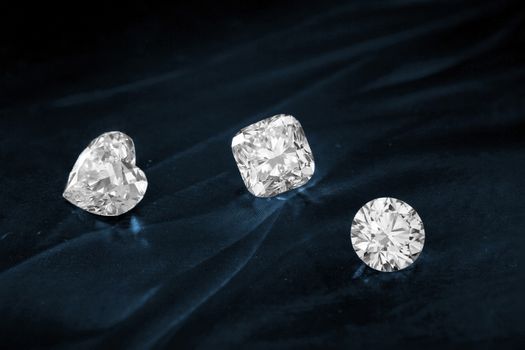
Three exquisite diamonds featuring heart, cushion, and round cuts displayed on dark fabric. Photo: The Glorious Studio / Pexels
Beyond style and setting, the core value and ethical integrity of an engagement ring largely depend on understanding the '4 Cs' of diamonds, selecting the right metal, and ensuring ethical sourcing. The 4 Cs – Cut, Color, Clarity, and Carat weight – are the universal grading standards for diamonds, dictating their beauty and price. Cut is arguably the most important, as it refers to how well a diamond's facets interact with light, determining its sparkle, brilliance, and fire. A well-cut diamond will shimmer magnificently, regardless of its size. Color refers to the absence of color in a diamond, graded on a scale from D (colorless) to Z (light yellow or brown). D-F are considered colorless, G-J near-colorless. Clarity measures the absence of inclusions (internal flaws) and blemishes (external imperfections), graded from Flawless (FL) to Included (I). Most people opt for diamonds in the VS1-VS2 (Very Slightly Included) or SI1-SI2 (Slightly Included) range, where inclusions are not visible to the naked eye. Carat weight is the diamond's weight, not its size, though larger carat weights generally mean larger diamonds. It's crucial to balance the 4 Cs based on your budget and priorities; often, compromising slightly on one C (like color or clarity) can allow for a larger or better-cut diamond. Choosing the right metal for the band is also vital. Platinum is a durable, naturally white, hypoallergenic metal, prized for its strength and resistance to tarnish. White gold, an alloy of gold with white metals, is a popular and more affordable alternative to platinum, though it requires re-rhodium plating every few years to maintain its bright white luster. Yellow gold, a classic choice, offers a warm, traditional aesthetic. Rose gold, a blend of gold and copper, provides a romantic, pinkish hue that has gained immense popularity. Consider her existing jewelry, skin tone, and lifestyle when making this decision. Finally, ethical sourcing is a paramount concern for many couples today. Ensure that the diamonds you choose are conflict-free, meaning they were not mined in war zones and sold to finance armed conflicts. Reputable jewelers adhere to the Kimberley Process Certification Scheme, which tracks diamonds from mine to market. Beyond conflict-free, consider diamonds from mines with fair labor practices and environmental responsibility. Laboratory-grown diamonds are also an increasingly popular and ethical alternative, offering identical chemical and physical properties to natural diamonds at a more accessible price point. Discuss these options with your jeweler to make a choice that aligns with your values. For a deeper dive into diamond characteristics, check out our resource on understanding diamond quality.

Practical Tips and Common Mistakes to Avoid
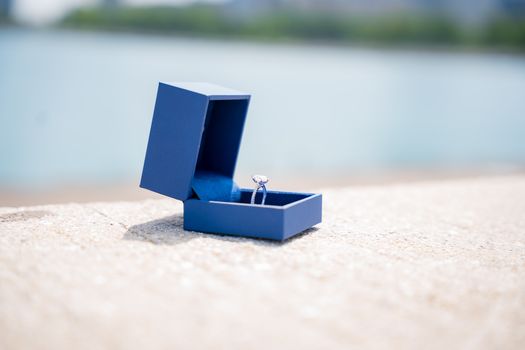
A diamond engagement ring displayed in a blue box near a waterfront setting. Photo: Alis Adhikari / Pexels
Embarking on the journey to select an engagement ring is exciting, but it's also fraught with potential pitfalls. By being aware of common mistakes and following some practical advice, you can ensure a smooth and successful experience. **Practical Tips:** * **Start Early:** Give yourself ample time, ideally 2-3 months, for research, custom design, and potential shipping. Rushing can lead to poor decisions or limited options. * **Discreetly Measure Ring Size:** This can be tricky if you want to maintain the surprise. Borrow one of her existing rings (that she wears on her ring finger) and trace its inner circumference, or press it into a bar of soap for an impression. Alternatively, ask a close friend or family member if they know her size. * **Consider Her Lifestyle:** As mentioned, an active lifestyle calls for durable settings and possibly a lower profile. A high-maintenance ring might not be the best fit for someone who's constantly on the go or works with their hands. * **Get it Insured:** An engagement ring is a significant investment. Insure it immediately after purchase to protect against loss, theft, or damage. * **Ask About Return/Exchange Policies:** Understand the jeweler's policies before you buy, especially if you're not 100% certain about the style or size. This provides a safety net. * **Think About the Wedding Band:** While not immediately necessary, considering how the engagement ring will pair with a future wedding band can prevent issues later. Some unique engagement ring styles require custom-fitted wedding bands. **Common Mistakes to Avoid:** * **Ignoring Her Preferences:** This is the biggest mistake. Even if you have a strong idea, subtle clues about her taste are invaluable. Don't choose something solely based on what *you* like. * **Not Setting a Budget:** Going in without a clear budget can lead to either overspending or feeling overwhelmed by choices. A budget helps filter options and keeps you focused. * **Overemphasizing Carat Weight:** While size is often a focal point, a larger diamond with poor cut, color, or clarity can look dull. Prioritize a well-cut diamond within your budget; it will sparkle far more than a large, poorly cut stone. * **Buying Online Without Research:** While online retailers offer competitive pricing, ensure they are reputable, offer clear return policies, and provide detailed grading reports (like GIA or AGS) for their diamonds. Seeing a diamond in person can also be very helpful. * **Forgetting About Maintenance:** All rings require some care. Bezel settings are low maintenance, while pave or intricate settings might need more frequent cleaning and inspection to ensure stones are secure. * **Falling for Sales Pressure:** A good jeweler will educate and guide you, not pressure you. If you feel rushed or uncomfortable, don't hesitate to walk away and find another vendor. By keeping these tips in mind and avoiding these common missteps, you'll be well-equipped to select an engagement ring that will be cherished for a lifetime.

Comparison

FeatureRound BrilliantPrincess CutOval CutEmerald Cut
Sparkle/BrillianceExceptional (Highest)ExcellentVery GoodGood (Step-cut)
ShapeCircularSquare/RectangularElongated CircleRectangular (Step-cut)
Perceived SizeStandardGoodLarger (Elongating)Good (Elongating)
Durability (Corners)✓ (No sharp corners)✗ (Vulnerable corners)✓ (No sharp corners)✓ (Beveled corners)

What Readers Say

"This guide truly demystified how to choose an engagement ring style. I learned so much about diamond shapes and settings, which helped me confidently pick a ring my fiancée absolutely adores. The advice on observing her style was spot on!"

Michael S. · Austin, TX

"As someone completely overwhelmed by options, this article was a lifesaver. It broke down the 4 Cs and metal types in an easy-to-understand way, making the whole process feel much less daunting. Highly recommend for anyone starting their ring search."

Jessica L. · Seattle, WA

"Following the tips here, I managed to find a stunning emerald cut engagement ring that perfectly matches my partner's elegant aesthetic. The advice on checking her Pinterest boards was genius and led me straight to her dream ring style."

David R. · Miami, FL

"The information on ethical sourcing was particularly helpful to me; it's a topic I cared deeply about. While I still felt a bit lost in the sheer number of options, this guide provided an excellent framework to begin my search confidently."

Sarah P. · Denver, CO

"My fiancé used this guide to pick my ring, and honestly, he nailed it! I love that he considered my active lifestyle, choosing a durable setting that still looks incredibly beautiful. It truly feels like 'me'."

Emily H. · Chicago, IL

Frequently Asked Questions

What is the most popular engagement ring style?

The round brilliant diamond in a solitaire or halo setting remains the most consistently popular engagement ring style. Its timeless appeal and exceptional sparkle make it a favorite. However, oval diamonds are rapidly gaining popularity for their elegant, elongated shape and brilliance.

Is it okay to ask my partner what style of ring she likes?

Absolutely! While some prefer a complete surprise, many partners appreciate being involved in the decision or at least dropping hints. It ensures she'll get a ring she truly loves and wears confidently. You can subtly ask, browse together, or have a close friend gather information.

How do I discreetly find out her ring size?

The best methods include borrowing one of her existing rings (from her ring finger) and taking it to a jeweler to measure, or tracing its inner circumference. You could also ask a close friend or family member if they know. As a last resort, estimate based on average sizes, but resizing is often necessary.

How much should I spend on an engagement ring?

The traditional 'two or three months' salary' rule is outdated and should not dictate your budget. The ideal amount is what you can comfortably afford without going into significant debt. Focus on quality and what your partner will love, rather than a specific monetary benchmark.

What's the difference between white gold and platinum?

White gold is an alloy of yellow gold mixed with white metals and plated with rhodium to give it a bright white finish, which wears off over time, requiring replating. Platinum is a naturally white, denser, and more durable metal that is also hypoallergenic. Platinum is generally more expensive due to its rarity and density.

Who should consider a lab-grown diamond?

Lab-grown diamonds are an excellent choice for anyone seeking a more affordable, ethically traceable diamond that is chemically, physically, and optically identical to a natural diamond. They appeal to environmentally conscious buyers and those who want a larger stone for their budget without compromising on quality.

Are certain ring settings more durable than others?

Yes, settings like bezel and channel offer excellent protection for the diamond, making them very durable and suitable for active lifestyles. Prong settings, while maximizing sparkle, expose more of the diamond and may require more frequent checks for loose prongs. Pave settings can also be more delicate due to the numerous small stones.

What are the emerging trends in engagement ring styles?

Current trends include oval and pear-shaped diamonds, unique antique cuts like Asscher and Old European Cut, and alternative gemstones like sapphires or emeralds. Also popular are unique settings like east-west orientation, hidden halos, and stackable bands, allowing for personalization and a modern twist on classic designs.

Choosing an engagement ring style is a journey of love, observation, and informed decisions. By utilizing the insights from this guide, you're now equipped to select a ring that not only sparkles but also perfectly encapsulates your unique story and her individual style. Take the next step with confidence and find the ring that will symbolize your forever.

Topics: how to choose an engagement ring styleengagement ring stylesdiamond shapesring settingsengagement ring guide
Leo List
Brampton weed
Adultwork EstrelaBet Vai de Bet R7 Bet Betão Galera Bet Rainbet Bet9ja Shop SportyBet BetKing Sisal Loto Foot Hollywoodbets YesPlay Odibets RushBet Jugabet BetWarrior BetCity MSport betPawa Fortebet