How to Tell if Jewelry is Real Gold: Your Ultimate Guide
June 21, 2026 17 min read 3,404 words
Master the art of verifying gold authenticity with simple, effective methods and avoid costly mistakes.
Verify Your Gold Now
Understanding Gold Purity and Hallmarks
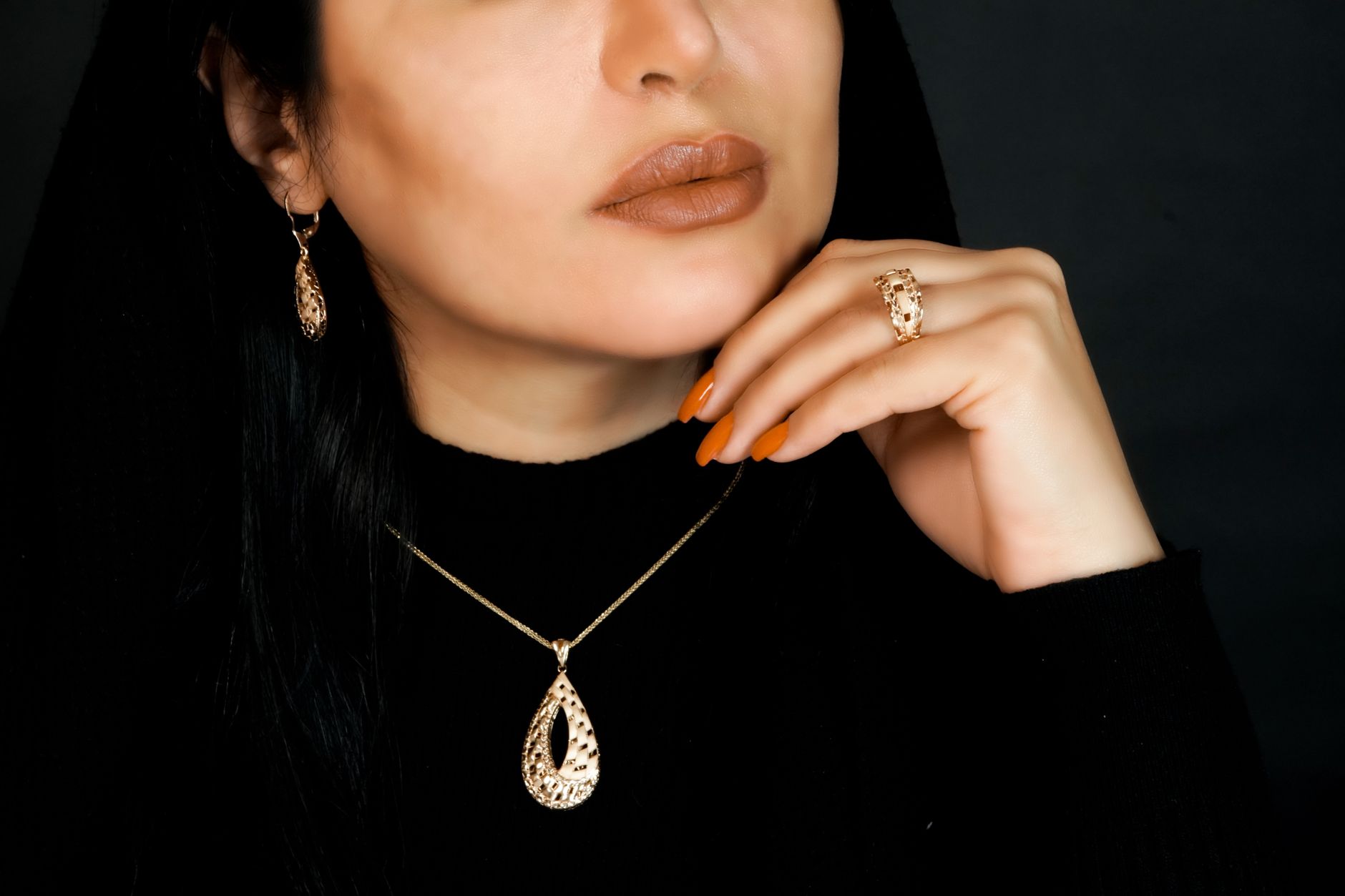
 Photo: Meruyert Gonullu / Pexels
The journey to confidently determine if your jewelry is real gold begins with a fundamental understanding of gold purity and the markings that signify it. Gold, in its purest form (24 karat), is incredibly soft and impractical for everyday jewelry. Therefore, it is alloyed with other metals like copper, silver, or zinc to increase its durability. The proportion of pure gold in an alloy is measured in karats (K). 24K gold is 99.9% pure, 18K gold is 75% pure (18 parts gold, 6 parts alloy), 14K gold is 58.3% pure, and 10K gold is 41.7% pure. These karats are the most common you'll encounter in the US jewelry market, with 14K being particularly prevalent due to its balance of durability and gold content.
Hallmarks, also known as assay marks or purity stamps, are tiny engravings found on jewelry that indicate its gold content. These marks are typically located on inconspicuous areas such as the inside of a ring band, on the clasp of a necklace or bracelet, or the post of an earring. Common hallmarks include '24K', '18K', '14K', or '10K' for karat gold. You might also see numerical representations like '750' for 18K (75% pure), '585' for 14K (58.5% pure), or '417' for 10K (41.7% pure). In some European countries, you might find marks like '375' for 9K gold. Beyond purity, some hallmarks may include a manufacturer's mark, a country of origin mark, or a symbol from an assay office that certified the gold's purity.
While hallmarks are a strong indicator of authenticity, they are not foolproof. Unfortunately, counterfeiters can stamp fake jewelry with legitimate-looking hallmarks to deceive buyers. Therefore, relying solely on hallmarks is not advisable. They should always be considered in conjunction with other tests. A magnifying glass is an essential tool for examining these tiny marks, as they can sometimes be worn down or poorly stamped. Look for clarity and consistency in the engraving. If the mark looks fuzzy, uneven, or suspiciously perfect, it might warrant further investigation. Understanding these marks is your first line of defense in identifying genuine gold and an important step in learning
how to care for your precious metals.
It's also important to distinguish between solid gold and gold-plated or gold-filled items. Gold-plated jewelry has a very thin layer of gold applied over a base metal, while gold-filled items have a thicker layer, typically 5% of the item's weight, bonded to a base metal. These items will often have different markings, such as 'GP' for gold plated, 'GF' for gold filled, or 'HGE' for heavy gold electroplate. While they contain real gold, their value is significantly less than solid gold, and they will wear down over time, revealing the base metal underneath. A thorough inspection of these marks is crucial for an accurate assessment of your jewelry's true composition and value.
At-Home Tests for Gold Authenticity: Practical and Safe Methods
 Photo: Tima Miroshnichenko / Pexels
Before resorting to more advanced or potentially damaging methods, several practical and safe at-home tests can help you determine if your jewelry is real gold. These methods are generally non-invasive and can provide strong indications of authenticity without requiring specialized equipment.
**The Magnet Test:** This is one of the simplest and most commonly cited tests. Gold is a non-ferromagnetic metal, meaning it is not attracted to a magnet. If your jewelry strongly reacts to a magnet and sticks to it, it is almost certainly not real gold. However, it's crucial to use a strong magnet, such as those found in refrigerator magnets or a neodymium magnet, as weaker magnets might not yield a clear result. Keep in mind that while real gold won't stick, some base metals used in fake jewelry (like stainless steel) are also non-magnetic. Therefore, this test is excellent for ruling out fake gold but not definitive proof of real gold. It's a good starting point but should be combined with other tests.
**The Skin Discoloration Test:** Real gold should not cause skin discoloration. If you wear a piece of jewelry for an extended period, particularly in warm weather or during physical activity, and it leaves a green, black, or blue mark on your skin, it's highly likely that the jewelry is not real gold. This discoloration is usually a reaction between the base metals (like copper or nickel) in the alloy and your skin's oils, sweat, or cosmetics. While this test is generally reliable for identifying fake gold, some individuals with highly acidic skin might experience a slight reaction even to high-karat gold, though this is rare and usually less pronounced than with fake jewelry.
**The Ceramic Plate Scratch Test:** For this test, you'll need an unglazed ceramic plate (the bottom of a ceramic mug or tile often works). Find an inconspicuous area on your jewelry and gently drag it across the surface of the ceramic plate, applying light pressure. If the jewelry leaves a gold streak, it's a good indication that it's real gold. If it leaves a black or dark streak, it's likely not gold or is merely gold-plated. The key here is to use an unglazed surface, as a glazed plate will not provide the necessary friction. Be cautious not to press too hard, as this test can leave a minor scratch on the jewelry, especially if it's high-karat and therefore softer. This test relies on the principle that different metals leave different colored streaks when abraded.
**The Float Test (for larger items):** This test is more applicable to larger, denser gold items like coins or bars, but can sometimes be used for solid, chunky jewelry. Gold is a very dense metal. If you drop a piece of real gold into a container of water, it should sink quickly to the bottom. If it floats or hovers, it's definitely not real gold. However, this test is less effective for hollow or very lightweight jewelry, as the air pockets or low mass might give a misleading result. Always combine this with other tests for a more accurate assessment.
These at-home tests are valuable preliminary steps in authenticating gold. They are easy to perform and don't require special tools, making them accessible to anyone. However, remember that no single at-home test is 100% conclusive on its own. The most reliable approach is to perform several of these tests and look for consistent results. If multiple tests suggest your jewelry is fake, it's a strong indicator. Conversely, if all tests point to real gold, you can be more confident, though a professional opinion is always the gold standard for high-value items.
Advanced Gold Testing Methods: When to Seek Professional Help
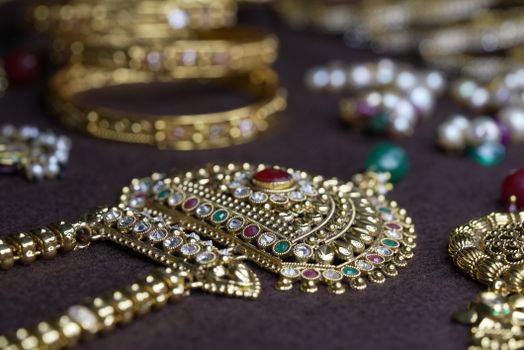 Photo: Kunal Lakhotia / Pexels
While at-home tests provide a good initial assessment, for definitive proof of authenticity, especially for valuable pieces or when buying from an unknown source, advanced gold testing methods are indispensable. These methods often require specialized equipment and expertise, making professional jewelers and appraisers the go-to experts for such verification. Understanding these techniques will help you know what to expect and why they are more reliable.
**The Acid Test (Nitric Acid Test):** This is one of the most common and reliable methods used by jewelers. It involves applying a small drop of nitric acid to an inconspicuous part of the gold item, or more commonly, rubbing the item on a touchstone (a special dark, abrasive stone) to leave a streak of gold. Then, various strengths of nitric acid are applied to the streak. Different karat golds react differently to specific acid strengths. For example, 10K gold will dissolve in 10K acid, but 14K gold will not. A skilled jeweler can precisely determine the karat of the gold based on its reaction to the acid. This test is highly accurate but requires extreme caution due to the corrosive nature of nitric acid. It should only be performed by experienced individuals or professionals, as improper use can damage the jewelry or cause injury. This test is a cornerstone in
gold valuation.
**Electronic Gold Testers:** These devices offer a less destructive alternative to acid tests. Electronic gold testers work by measuring the electrical conductivity of the metal. Since different metals have unique electrical properties, the device can provide a digital reading that corresponds to a specific karat of gold. While generally accurate, their reliability can vary depending on the quality of the tester and the skill of the operator. They are particularly useful for testing items that cannot be scratched or for which acid testing is not suitable.
**X-Ray Fluorescence (XRF) Spectrometry:** This is the most accurate and non-destructive method for testing gold purity. XRF analyzers use X-rays to excite the atoms in the metal, causing them to emit secondary X-rays (fluorescence) at characteristic energies. The analyzer then detects and measures these energies, providing a precise elemental breakdown of the metal alloy, including the exact percentages of gold and other alloying elements. This method is incredibly precise, can detect plating, and does not damage the jewelry in any way. It's often used by high-end jewelers, refiners, and pawn shops for definitive authentication and valuation, especially for high-value items or when absolute certainty is required. The downside is the cost of the equipment, which makes it primarily a professional tool.
**Density Test (Specific Gravity Test):** Gold is one of the densest metals. A density test involves accurately measuring the weight of the jewelry in air and then again when submerged in water. Using a specific formula (density = mass/volume, where volume is determined by water displacement), the specific gravity of the item can be calculated. Pure gold has a specific gravity of 19.3 g/cm³. Different karats will have slightly lower specific gravities (e.g., 18K is around 15.2-15.9 g/cm³). This test is highly accurate for solid gold items but can be misleading for hollow pieces or those with non-gold components (like gemstones), as these will skew the volume measurement. It requires precise measurements and specialized scales, making it another method best left to professionals.
When you take your jewelry to a professional, they will typically employ a combination of these methods to ensure accuracy. They will also consider the item's age, craftsmanship, and overall condition. Always choose a reputable jeweler or appraiser who is transparent about their testing methods and provides clear explanations of their findings. This professional verification gives you the peace of mind that your treasured possessions are indeed real gold.
Common Mistakes and Expert Tips for Gold Verification
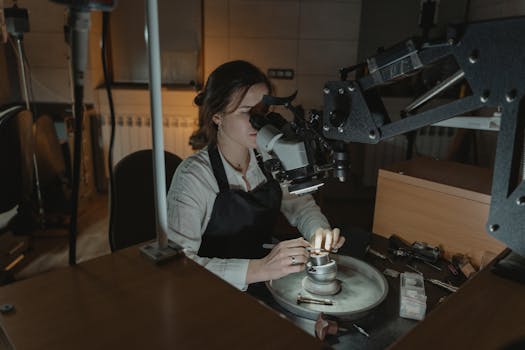 Photo: Tima Miroshnichenko / Pexels
Navigating the world of gold authenticity can be tricky, and many common pitfalls can lead to misidentification or costly errors. Being aware of these mistakes and equipping yourself with expert tips will significantly enhance your ability to tell if jewelry is real gold.
**Common Mistakes to Avoid:**
* **Relying Solely on Hallmarks:** As mentioned, hallmarks can be faked. Always combine hallmark inspection with other physical or chemical tests. A genuine-looking stamp on a piece that fails a magnet test is a huge red flag.
* **Assuming 'Heavy' Means Real:** While gold is dense, some base metals can also be heavy. The weight alone is not a definitive indicator, especially with modern alloys.
* **Ignoring Discoloration:** If gold-colored jewelry shows signs of tarnishing or green/black marks on the skin, it's almost certainly not solid gold, regardless of how good it looks initially. This is often an indication of copper or other base metals oxidizing.
* **Being Fooled by 'Gold Tone':** Many fashion jewelry pieces are simply 'gold tone' – they are made of base metals and merely colored to look like gold. These will never have hallmarks indicating karat purity.
* **Improper Acid Test Application:** Attempting an acid test without proper training or safety equipment can damage the jewelry or cause serious injury. This is a job for professionals.
* **Forgetting to Clean Jewelry First:** Dirt, grime, and lotions can interfere with certain tests, especially the ceramic scratch test or even the magnet test if residue creates a false barrier.
**Expert Tips for Accurate Verification:**
* **Use a Magnifying Loupe:** For hallmarks and intricate details, a jeweler's loupe (10x magnification) is invaluable. It helps you clearly see the tiny stamps and identify any inconsistencies in craftsmanship that might suggest a fake.
* **Test in Multiple Spots:** If you're performing a scratch test or even an acid test (professionally), test in a few different, inconspicuous areas. Sometimes, an item might be plated unevenly, or a small area might have been repaired with a different metal.
* **Understand Karat Differences:** Remember that 10K gold will look slightly different from 18K or 24K gold due to varying alloy compositions. 10K can have a paler, sometimes slightly reddish hue, while 24K is a rich, deep yellow. Be suspicious if a piece stamped 24K looks unusually pale.
* **Consider the Item's Age and Origin:** Older jewelry, especially from specific regions, might have different hallmarking conventions. Researching historical hallmarks can be helpful. For very old pieces, wear and tear might make hallmarks illegible, increasing the need for professional testing.
* **Be Wary of Unbelievably Low Prices:** If a deal seems too good to be true for a gold item, it almost certainly is. Real gold has an inherent value based on its weight and purity, which fluctuates with the market price of gold. Significant discounts should raise suspicion.
* **Consult a Reputable Jeweler/Appraiser:** For high-value items, heirloom pieces, or when you have any doubt, a professional appraisal is the most secure route. They have the tools, knowledge, and experience to provide a definitive answer and can often offer a certificate of authenticity.
* **Educate Yourself on Gold Market Prices:** Being aware of the current spot price of gold per ounce can give you a rough estimate of what a piece of gold jewelry *should* be worth, based on its weight and purity. This knowledge helps you identify overpriced fakes or suspiciously underpriced genuine items.
By avoiding common mistakes and applying these expert tips, you can significantly increase your confidence in identifying real gold jewelry. The combination of visual inspection, simple at-home tests, and professional verification when necessary, forms a robust strategy for protecting your investments and ensuring the authenticity of your precious pieces.