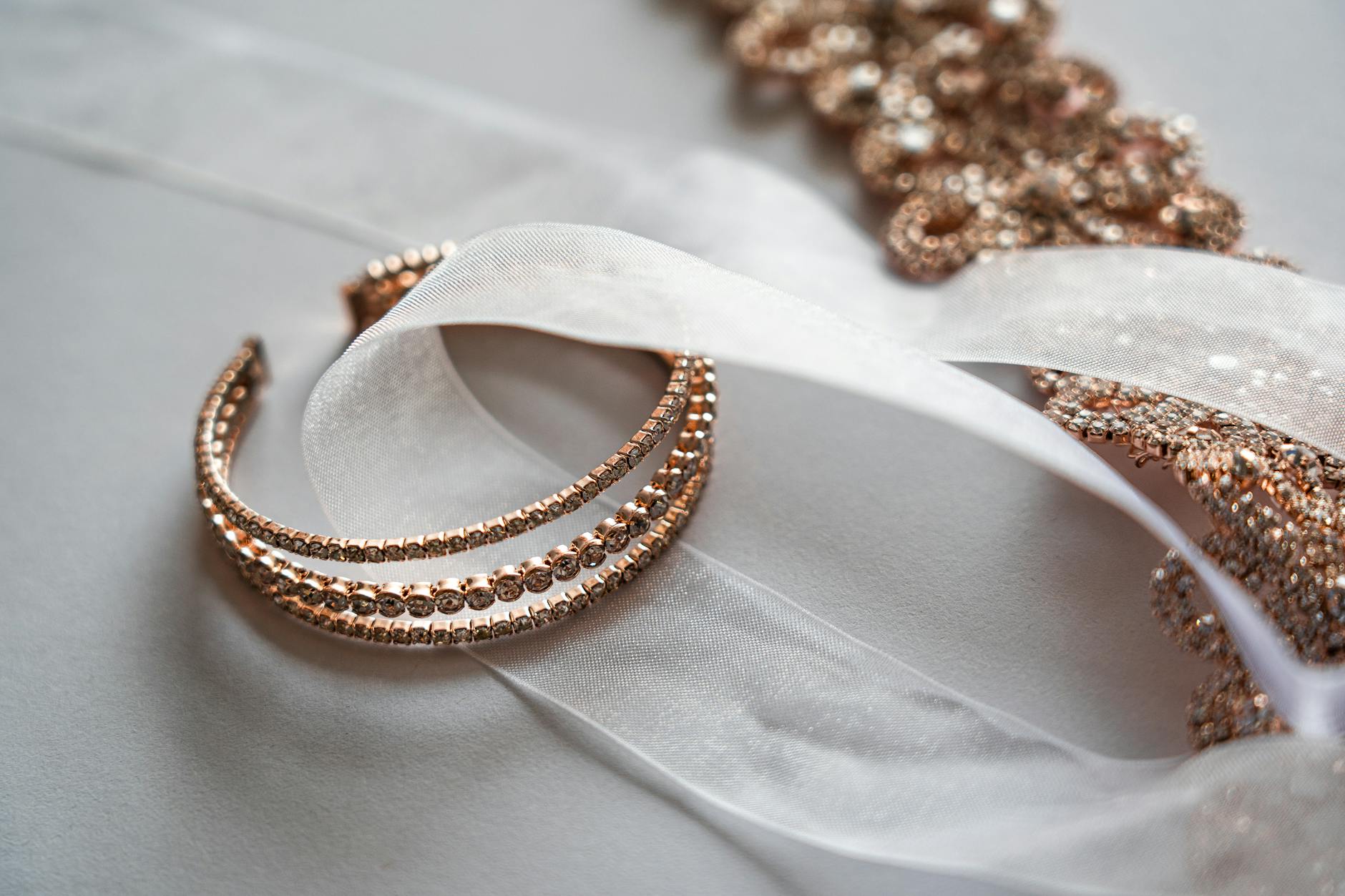
What is a Tennis Bracelet Made Of? Unveiling Its Sparkle
what is a tennis bracelet made of

What is a Tennis Bracelet Made Of? Unveiling Its Sparkle

Explore the exquisite materials and intricate craftsmanship that define the timeless elegance of a tennis bracelet.

Discover Your Perfect Bracelet

Key Takeaways

  • ✓ Tennis bracelets are characterized by a continuous line of individually set stones.
  • ✓ The most common materials are diamonds set in gold (white, yellow, or rose) or platinum.
  • ✓ Synthetic diamonds, moissanite, and other gemstones are popular alternatives.
  • ✓ Secure clasps, like box clasps with safety latches, are crucial for preventing loss.

How It Works

1
Selecting the Metal

Choose between various gold karats (10K, 14K, 18K) or platinum, based on durability, purity, and aesthetic preference. Each metal offers a unique luster and contributes to the bracelet's overall appearance.

2
Choosing the Gemstones

Decide on natural diamonds for classic luxury, lab-grown diamonds for ethical brilliance, or alternative gemstones like moissanite for comparable sparkle at a different price point. Consider the 4Cs (Cut, Color, Clarity, Carat) for diamonds.

3
Setting the Stones

The most common settings for tennis bracelets are prong, bezel, or channel settings. Each setting method securely holds the gemstones while influencing the bracelet's flexibility, durability, and how much light interacts with the stones.

4
Ensuring Security and Fit

A high-quality tennis bracelet features a robust clasp, often a box clasp with one or two safety latches, to prevent accidental opening. Proper sizing is also essential for comfort and to minimize the risk of the bracelet catching or slipping off.

The Foundation: Metals Used in Tennis Bracelets
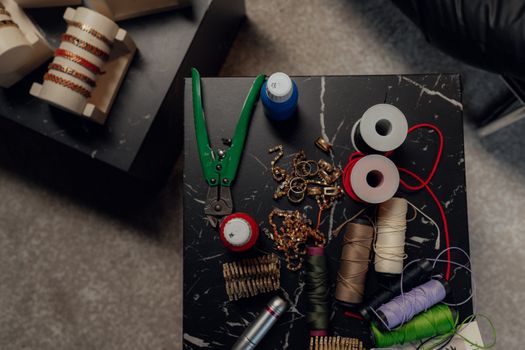
Top view of a crafting table with tools, spools, and jewelry making materials. Photo: Seljan Salimova / Pexels
A tennis bracelet's enduring appeal begins with its foundation: the metal. The choice of metal not only dictates the bracelet's overall aesthetic but also its durability, hypoallergenic properties, and price point. Understanding the characteristics of each metal is crucial when considering what is a tennis bracelet made of. Gold, in its various karats and colors, is by far the most popular choice. 14K and 18K gold are commonly used for tennis bracelets due to their balance of purity, strength, and lustrous appearance. 18K gold contains 75% pure gold, offering a richer yellow hue and higher value, but is slightly softer than 14K gold (58.3% pure gold). 14K gold is a more durable option, making it excellent for everyday wear, as it's less prone to scratching or bending. White gold, an alloy of gold with white metals like palladium or nickel, is frequently rhodium-plated to enhance its bright, silvery-white finish, which beautifully complements diamonds. Rose gold, created by alloying gold with copper, offers a romantic, warm, pinkish hue that has gained significant popularity in recent years. Each gold color provides a distinct backdrop for the continuous line of stones, allowing for personalized style. Platinum stands as another premium choice for tennis bracelets. Renowned for its exceptional durability, natural white luster, and hypoallergenic properties, platinum is heavier and denser than gold, giving it a substantial feel. Its strength makes it an ideal metal for securely holding precious gemstones, as it is less likely to wear down or bend over time. Unlike white gold, platinum does not require rhodium plating to maintain its color, as it is naturally white. While typically more expensive than gold, platinum's longevity and prestige make it a worthwhile investment for many. For those seeking a more budget-friendly yet still elegant option, sterling silver can be found, though it's less common for high-end diamond tennis bracelets due to its softer nature and tendency to tarnish. However, silver tennis bracelets with cubic zirconia or other less expensive gemstones offer a beautiful and accessible entry point into this classic style. The metal's role extends beyond mere aesthetics; it provides the structural integrity that allows the gemstones to shine brightly and securely on the wrist, making it an indispensable component of the tennis bracelet's design.

The Brilliance: Gemstones and Their Settings
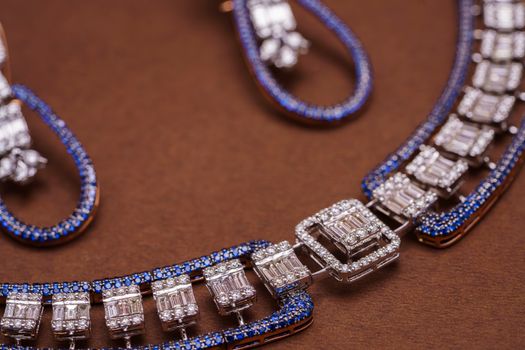
Close-up of an exquisite blue sapphire and diamond necklace and earrings against a brown background. Photo: Kunal Lakhotia / Pexels
The defining feature of a tennis bracelet is its continuous line of dazzling gemstones. When asking what is a tennis bracelet made of, the answer often immediately turns to diamonds. Diamonds are the quintessential choice for tennis bracelets, celebrated for their unparalleled sparkle, brilliance, and timeless elegance. Natural diamonds are graded based on the 4Cs: Cut, Color, Clarity, and Carat weight. The cut is paramount, as it determines how well a diamond reflects light, creating its fire and scintillation. Color grades range from D (colorless) to Z (light yellow or brown), with colorless or near-colorless diamonds being most prized for tennis bracelets. Clarity refers to the absence of inclusions (internal flaws) and blemishes (external imperfections). While perfect clarity (FL/IF) is rare and expensive, diamonds with eye-clean clarity (VS1, VS2, SI1) are excellent choices for tennis bracelets, offering beauty without visible flaws to the naked eye. Carat weight measures a diamond's size, with tennis bracelets often featuring multiple smaller diamonds that collectively contribute to a significant total carat weight. Beyond natural diamonds, lab-grown diamonds have emerged as a popular and ethical alternative. These diamonds possess the identical chemical, physical, and optical properties as mined diamonds, offering the same brilliance and durability but often at a more accessible price point and with a traceable origin. For those seeking even more budget-friendly options, moissanite is an excellent choice. Moissanite is a naturally occurring mineral, silicon carbide, synthesized in labs to create gemstones that exhibit even greater fire and brilliance than diamonds, due to their higher refractive index. Cubic zirconia (CZ) is another widely used diamond simulant, offering a cost-effective way to achieve a similar aesthetic, though it is softer and less durable than diamonds or moissanite. The method by which these gemstones are set into the metal band is equally critical. The most common settings for tennis bracelets include: * **Prong Setting:** This classic setting uses small metal claws (prongs) to hold each gemstone securely in place, allowing maximum light to enter the stone from all angles, enhancing its brilliance. It's crucial that the prongs are well-made and regularly inspected to prevent stones from loosening. * **Bezel Setting:** In a bezel setting, a thin metal rim encircles the entire girdle of each gemstone, providing the most secure hold. This setting offers a very modern and sleek look, and while it might slightly reduce light entry compared to prong settings, it offers superior protection against chips and snags. * **Channel Setting:** Here, gemstones are set side-by-side into a channel created by two strips of metal, with no metal separating them individually. This creates a smooth, continuous line of sparkle and offers good protection for the stones. It’s a very durable and snag-free option. The choice of gemstone and setting significantly influences both the appearance and the practical aspects of a tennis bracelet, from its sparkle factor to its suitability for daily wear.

Craftsmanship and Durability: Ensuring Longevity
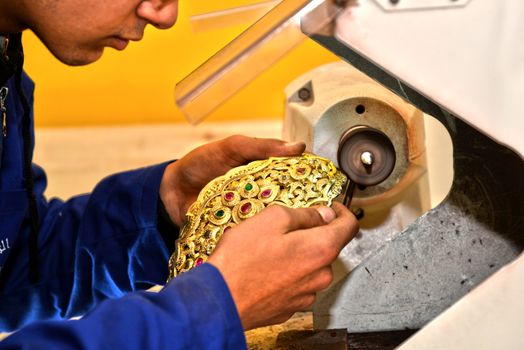
Skilled artisan polishing intricate gold jewelry piece using machinery in a Fès workshop. Photo: Moussa Idrissi / Pexels
The true beauty and value of a tennis bracelet extend beyond its raw materials; it lies in the meticulous craftsmanship that brings these elements together. Understanding the nuances of construction is key to appreciating what is a tennis bracelet made of and ensuring its longevity. A well-crafted tennis bracelet should exhibit fluid movement, allowing it to drape elegantly around the wrist without stiffness or gaping. This flexibility is achieved through precise articulation between each link, often accomplished using small, sturdy hinges or connectors that allow the bracelet to conform comfortably to the wrist's curvature. Each gemstone, whether diamond, moissanite, or other, must be individually and securely set. In prong settings, for example, the prongs should be evenly spaced, robust enough to hold the stone firmly, and smoothly finished to prevent snagging on clothing or skin. Poorly set stones are a common issue in lower-quality bracelets and can lead to stones becoming loose or falling out over time. Jewelers pay close attention to the consistency of the stone sizes and shapes, ensuring a seamless, uniform line of sparkle that is the hallmark of a high-quality tennis bracelet. Perhaps the most critical component for durability and security is the clasp. Given the significant value often associated with tennis bracelets, a secure clasp is non-negotiable. The most common and reliable clasp type for tennis bracelets is the box clasp. This mechanism involves a tab that snaps into a hollow box, creating a strong, flush closure. To enhance security, most high-quality tennis bracelets incorporate one or two safety latches (also known as figure-eight safeties) on either side of the box clasp. These additional latches provide a crucial backup, preventing the bracelet from accidentally opening even if the primary clasp fails. Some designs may also feature a hidden clasp that integrates seamlessly into the bracelet's design, maintaining the continuous flow of stones while still offering robust security. Beyond the clasp, the overall construction of the metal links themselves contributes to durability. The thickness and gauge of the metal should be substantial enough to withstand daily wear without easily bending or deforming. Thin, flimsy links are a red flag for a bracelet that may not last. Furthermore, the finishing of the metal – the polishing and rhodium plating (for white gold) – should be flawless, indicating attention to detail and quality control. Regular inspections by a professional jeweler are recommended to check prong integrity, clasp security, and overall wear, ensuring that your tennis bracelet remains a cherished and secure adornment for many years to come.

Choosing and Caring for Your Tennis Bracelet: Tips for Longevity

Black and white close-up of intricate jewelry with manicured hand and elaborate designs. Photo: Gursher Gill / Pexels
Selecting the perfect tennis bracelet involves more than just admiring its sparkle; it requires careful consideration of materials, craftsmanship, and how it aligns with your lifestyle. Here are essential tips for choosing and caring for your tennis bracelet to ensure its beauty and longevity: **Tips for Choosing:** * **Prioritize the 4Cs for Diamonds:** If opting for natural or lab-grown diamonds, understand how cut, color, clarity, and carat weight impact both appearance and price. A well-cut diamond will always appear more brilliant, even if it has a slightly lower color or clarity grade. * **Inspect the Setting:** Ensure the setting (prong, bezel, or channel) is secure and well-executed. Prongs should be even, smooth, and firmly hold each stone. For channel settings, stones should sit flush and securely. * **Evaluate the Clasp:** A robust clasp is paramount. Look for a box clasp with at least one, preferably two, safety latches. Test the clasp multiple times to ensure it clicks securely into place and the safety latches function properly. * **Assess Flexibility and Draping:** A high-quality tennis bracelet should be flexible enough to drape gracefully around your wrist without any stiff sections or gaps between links. This indicates proper articulation and comfortable wear. * **Consider Metal Choice:** Match the metal (white gold, yellow gold, rose gold, platinum) to your personal style and existing jewelry. Platinum offers superior durability and hypoallergenic properties, while gold provides a range of aesthetic options. * **Try it On:** Always try the bracelet on to ensure a comfortable and secure fit. It should be snug enough not to slip off easily but loose enough for comfortable movement. **Tips for Caring:** * **Regular Cleaning:** Clean your tennis bracelet regularly with a soft brush (like an old toothbrush), mild soap, and warm water. Gently scrub the stones and settings to remove oils and dirt, then rinse thoroughly and pat dry with a lint-free cloth. Ultrasonic cleaners can also be used, but consult a jeweler first, especially for bracelets with certain gemstones or settings. * **Avoid Harsh Chemicals:** Remove your bracelet before engaging in activities that involve harsh chemicals, such as cleaning with bleach, gardening, or swimming in chlorinated pools. These chemicals can damage the metal, dull the stones, or even erode the integrity of the settings. * **Store Properly:** Store your tennis bracelet separately from other jewelry to prevent scratches. A soft pouch or a dedicated compartment in a jewelry box is ideal. This also helps prevent tangling, especially with other delicate necklaces or bracelets. * **Remove During Physical Activity:** Take off your bracelet before exercising, playing sports, or doing heavy labor. Impacts can loosen stones, bend prongs, or damage the clasp. * **Professional Inspections:** Have your tennis bracelet inspected by a professional jeweler at least once a year. They can check for loose stones, worn prongs, or a weakened clasp and perform any necessary repairs to prevent loss or damage. * **Be Mindful of Snags:** The continuous line of stones can sometimes catch on clothing or other objects. Be aware of your bracelet when putting on sweaters or reaching into bags to prevent snags that could pull on settings or links. By following these guidelines for selection and care, your tennis bracelet will remain a brilliant and cherished piece of jewelry for a lifetime.

Comparison

FeatureNatural DiamondLab-Grown DiamondMoissaniteCubic Zirconia
OriginMined from EarthCreated in LabCreated in Lab (mostly)Created in Lab
CompositionPure CarbonPure CarbonSilicon CarbideZirconium Dioxide
Brilliance/FireExcellentExcellentSuperiorGood
Hardness (Mohs)10109.258-8.5
Price (per carat)HighestMedium-HighMediumLowest
Ethics/SustainabilityVariableCertified EthicalGenerally EthicalGenerally Ethical

What Readers Say

"I always wondered what is a tennis bracelet made of, and this article clarified everything. My new lab-grown diamond bracelet in white gold feels incredibly secure and sparkles beautifully. I love knowing the ethical background of the materials."

Sarah J. · New York, NY

"The detailed explanation of different settings and metals really helped me choose the right tennis bracelet. I went with platinum and natural diamonds, and the craftsmanship is superb. It feels so solid and luxurious on my wrist."

Mark D. · Los Angeles, CA

"This guide made me confident in my purchase. I now understand the importance of the clasp and safety latches, which ultimately saved me from losing my bracelet when it snagged. It's truly a stunning piece, thanks to the insights here."

Emily R. · Austin, TX

"While I opted for a moissanite tennis bracelet due to budget, the information on its brilliance was spot-on. It's incredibly sparkly, though I do miss the subtle warmth of natural diamonds. Still, a fantastic alternative for the price."

David P. · Chicago, IL

"As a jewelry enthusiast, I appreciated the deep dive into 'what is a tennis bracelet made of'. The care tips have been invaluable in maintaining the luster of my rose gold and diamond bracelet. It looks as good as new after months of wear."

Jessica L. · Miami, FL

Frequently Asked Questions

What is the most common material a tennis bracelet is made of?

The most common material for a classic tennis bracelet is natural diamonds set in 14K or 18K white gold. However, yellow gold, rose gold, and platinum are also very popular choices for the metal, and lab-grown diamonds or moissanite are increasingly common alternatives for the gemstones.

Are tennis bracelets durable for everyday wear?

Yes, high-quality tennis bracelets are designed to be durable for everyday wear, especially those made with platinum or 14K gold and featuring secure settings like bezel or channel. However, it's always recommended to remove them during strenuous activities or when exposed to harsh chemicals to ensure their longevity.

How do I clean my tennis bracelet safely?

To clean your tennis bracelet, gently scrub it with a soft brush (like a toothbrush) using warm water and a mild, non-abrasive soap. Rinse thoroughly under running water and pat dry with a soft, lint-free cloth. Avoid harsh chemicals or abrasive cleaners.

Are lab-grown diamonds a good choice for a tennis bracelet?

Absolutely. Lab-grown diamonds are an excellent choice for tennis bracelets as they possess the identical chemical, physical, and optical properties as natural diamonds, offering the same brilliance and durability. They are often more affordable and provide an ethical, sustainable option.

What is the difference between a prong setting and a bezel setting for a tennis bracelet?

A prong setting uses small metal claws to hold each stone, maximizing light entry and sparkle. A bezel setting encircles the entire girdle of each stone with a metal rim, offering superior security and a sleeker, more modern look, though it may allow slightly less light into the stone.

Who should consider buying a platinum tennis bracelet?

Anyone prioritizing exceptional durability, a naturally bright white metal that doesn't require replating, and hypoallergenic properties should consider a platinum tennis bracelet. It's an excellent investment for those seeking a luxurious and long-lasting piece of jewelry.

What are the risks of a poorly made tennis bracelet?

A poorly made tennis bracelet carries several risks, including loose or falling out gemstones due to weak settings, a flimsy or insecure clasp that can lead to loss, and easily bent or broken links. Always choose a reputable jeweler and inspect the craftsmanship carefully.

Will tennis bracelet materials change in the future?

While classic materials like gold and diamonds will likely remain popular, future trends may see an increase in innovative, sustainable materials, advanced synthetic gemstones with new properties, and perhaps even smart jewelry integration. Ethical sourcing and traceability will also continue to grow in importance.

Understanding what is a tennis bracelet made of empowers you to make an informed decision for a piece of jewelry that will be cherished for a lifetime. Whether you choose classic diamonds in gold or explore modern alternatives, prioritize quality craftsmanship and secure settings. Discover your perfect tennis bracelet today and let its timeless sparkle adorn your wrist.

Topics: what is a tennis bracelet made oftennis bracelet materialsdiamond tennis braceletgold tennis bracelettennis bracelet care
Leo List
Brampton weed
Adultwork EstrelaBet Vai de Bet R7 Bet Betão Galera Bet Rainbet Bet9ja Shop SportyBet BetKing Sisal Loto Foot Hollywoodbets YesPlay Odibets RushBet Jugabet BetWarrior BetCity MSport betPawa Fortebet